%20250px_edited.png)
澳大利亞塔州中國佛教學院
澳大利亞塔州中國佛教學院
Tasmanian Chinese Buddhist Academy of Australia
About
Originating in ancient India during the 5th century BCE, Buddhism was founded by the Great Holy Sakyamuni Buddha (renounced crown prince Siddhartha Gautama). During the 1st century BCE, Buddhism transmitted into ancient China and begun the historical process of inter-cultural mingling, harmonising, tolerating, merging, exchange and mutual learning with the local Chinese culture and traditions. This resulted in the formation of a unique and new form of Buddhism - Chinese Buddhism. Chinese Buddhism embodies and amalgamates the distinctive characteristics of both ancient Indian culture and Chinese traditional culture.
In accordance to the holy tantra prophecy and revelation of the Holy Patriarch Bhagavan the Great Holy the Great Holy Jewel ZHI-JI Vimalakirti Elder Dharma Lord Jing-Wu, on 16th April 1989, Master Zhi-Ji, the current Patriarch of Chinese Han Transmission Tantrayana Buddhism - Holy Tantra Gu Fan Mi Jin-Gang-Dhyana Buddhism travelled to Hobart, Tasmania, Australia. Thus, commencing the world wide grand Dharma dissemination of the Holy School.
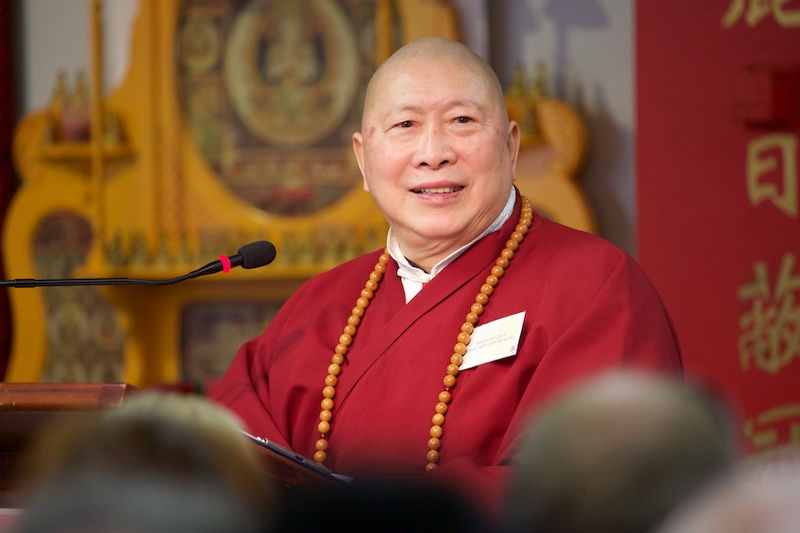
Master Zhi-Ji
28th Patriarch, and Current Patriarch
Chinese Han Transmission Tantrayana Buddhism -
Holy Tantra Gu Fan Mi Jin-Gang-Dhyana Buddhism
President
Tasmanian Chinese Buddhist Academy of Australia
Purpose
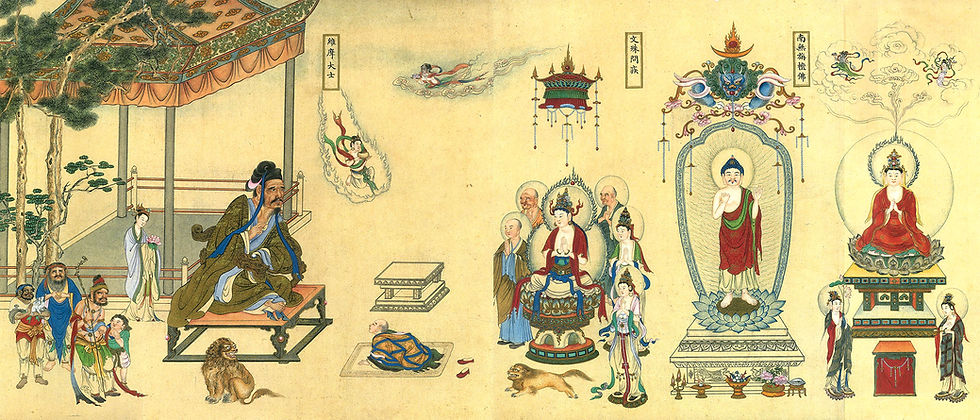
Master Zhi-Ji established Tasmanian Chinese Buddhist Academy of Australia in preparation for the establishment of Jin-Gang-Dhyana University. Hence, Tasmanian Chinese Buddhist Academy of Australia is a preparatory entity of Chinese Han Transmission Tantrayana Buddhism - Holy Tantra Gu Fan Mi Jin-Gang-Dhyana Buddhism to perform early-stage work for the establishment of Jin-Gang-Dhyana University. It is also a religious doctrinal and academic research institution within the School.
The purpose of the Academy is to research and study, preserve, promote and advocate Chinese Buddhist studies using traditional forms of teachings, yoga, discipline and perfection of the highest vehicle of Buddhism as the central axis. It aims to discover and foster personnel to disseminate Dharma and benefit sentient beings. Also with this prerequisite, it extensively includes the extraordinary essences of traditional Chinese culture in order to facilitate the endless transmission and inheritance of the Chinese civilisation.
Tasmanian Chinese Buddhist Academy of Australia was founded by Master Zhi-Ji, the current Patriarch of Chinese Han Transmission Tantrayana Buddhism - Holy Tantra Gu Fan Mi Jin-Gang-Dhyana Buddhism. It is organised and operated by three not-for-profit and tax-exempted organisations that are officially registered in Tasmania, Australia. They are Holy Tantra Esoteric Buddhism Incorporated, Jin-Gang-Dhyana Incorporated and Jin-Gang-Dhyana Wang Xin De Foundation Incorporated. Therefore, Tasmanian Chinese Buddhist Academy of Australia also observes the constitutions and conventions in accordance with the three organisations: adhering to the nature of purely academic research and not participating in any political matters or engaging in profit-making activities.
Key events
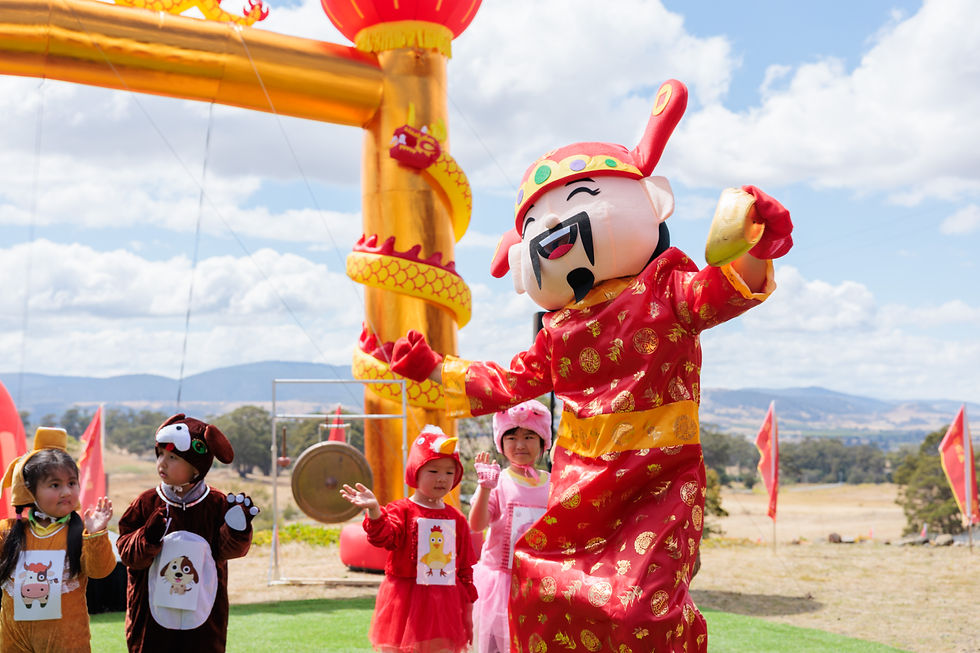
held annually in January/February each year;
watch this space for 2027 event date

held annually in May;
watch this space for 2027 event date
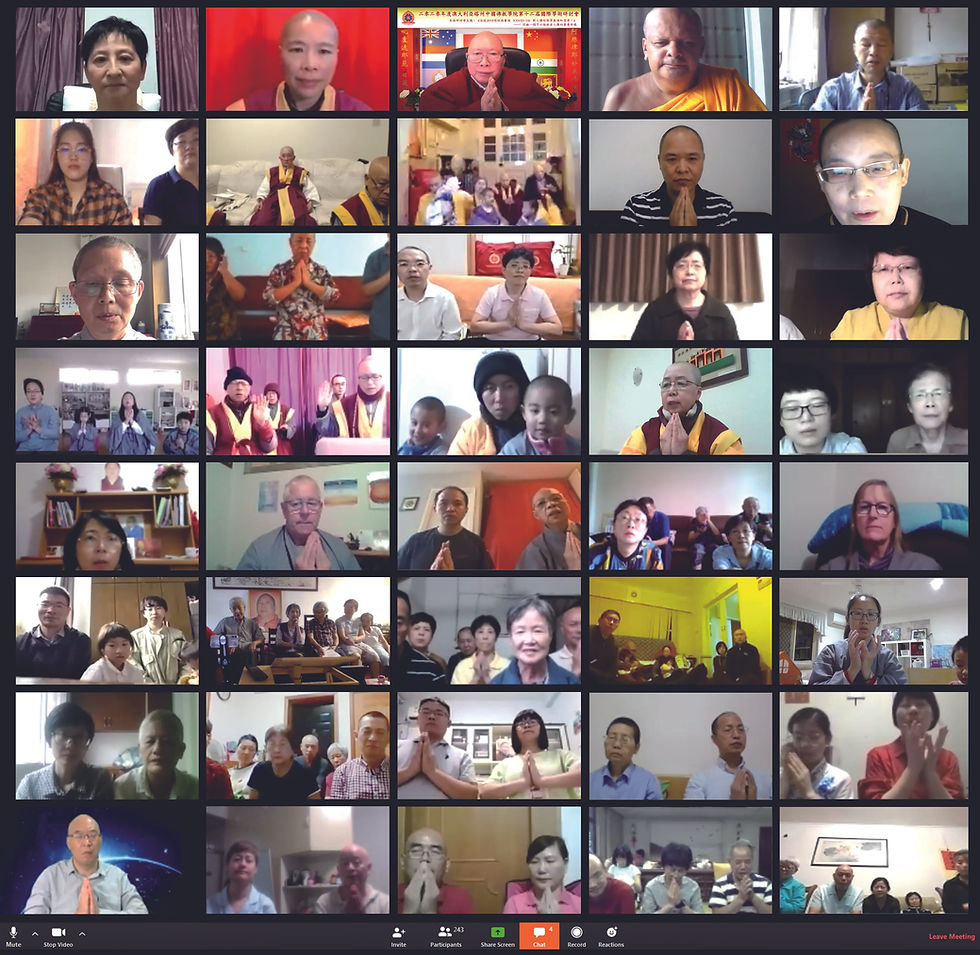
held annually in June/July;
to be held 18-19 July 2026
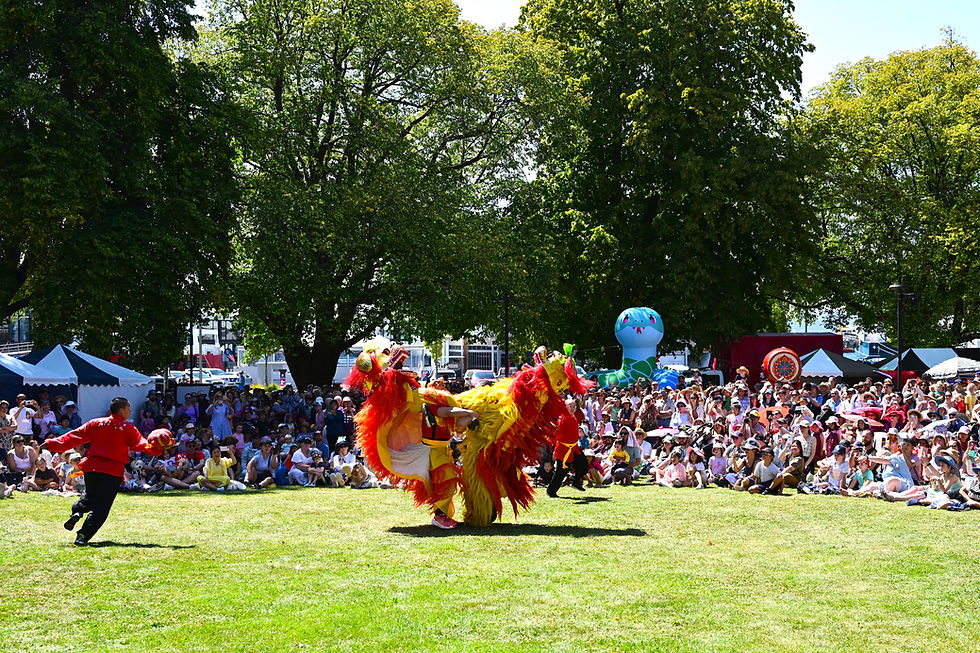
Lion dance
The Holy Dharma Lion Dance is a training item within Dynamic Dhyana Dharani of Tasmanian Chinese Buddhist Academy of Australia. The lion dance represents bravery, righteousness and yet possess enormous amiability. Those who train and practise this form of Dynamic Dhyana Dharani are able to eliminate all illnesses of the body and mind, as well as regulate the 74,000 minute and micro energy channels of the human body.
Within Buddhist Dharma, lions represent courageousness and power of the correct Dharma triumphing over negative energies of the universe. Hence, a pair of guardian stone lions are often erected at the entrance of Chinese Han Transmission Buddhist temples, one male and one female. The adoption of lions within Chinese Buddhist culture is exemplary of the cultural exchange between Buddhism and traditional Chinese culture.
The lively, powerful, agile and amiable actions of the Holy Dharma Lion Dance attracts and fascinates those who witness it, the joyous movements and acrobatic manoeuvres exude the positive energy of the universe. Since its very first performance in 2004, the Holy Dharma Lion Dance of Tasmanian Chinese Buddhist Academy of Australia has been widely accepted and welcomed; having performed more than 500 times in multiple large and small cities of Australia, such as Sydney, Melbourne, Perth and Hobart, along with various locations overseas. The Holy Dharma Lion Dance is a vehicle by which the Academy shares the values of both Buddhist and Chinese culture.


Dragon dance
The Holy Dragon Dance is another training item within Dynamic Dhyana Dharani of Tasmanian Chinese Buddhist Academy of Australia. Specifically, the Holy Dragon Dance is to commemorate Holy Ancestral Master Nagarjuna Buddha and his holy teachings. Through its graceful movements, freely spinning and soaring through the air, the Holy Dragon Dance symbolises the turning of countless Dharma wheels in all time spaces to benefit all sentient beings.
The dragon is the totem of Chinese culture, existing for over five thousand years. The dragon is a special “creature” with miraculous powers that can perform a variety of transformations within the Universe. It can ascend to the nine heavens, descend into the five oceans, and travel unhindered across the Universe. Evidently, the dragon is a being of immense freedom. As such, the Holy Dragon Dance represents the correct Dharma liberating sentient beings.
The Holy Dragon Dance is a vibrant and athletic performance that exemplifies unity and harmony, the Holy Tantra practitioners that engage in the Holy Dragon Dance embody the spirit of “humans and humans are a disconnected unity”, “humans and the universe are disconnected unity”. The Holy Dragon Dance of Tasmanian Chinese Buddhist Academy was first performed in the year 2000 at Hobart’s annual Christmas pageant and has now become a regular sight at various celebratory events around Tasmania.
